
Let’s be honest with each other for a second: your mop is lying to you.
Every night after close, someone on your crew dips a string mop into a bucket of lukewarm, gray water, sloshes it across your tile, and calls it a day. It feels like cleaning. It looks like cleaning.
It’s not cleaning.
What’s actually happening is an elaborate game of liquid hide-and-seek. The mop picks up a fraction of the surface dirt, mixes it with residual grease, and sweeps the rest directly into the lowest point on your floor: the grout.
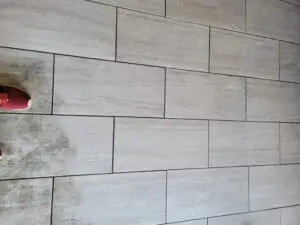
Because grout is essentially concrete’s porous, thirsty cousin, it drinks down every spill, splash, and mop-bucket deposit you throw at it. Over time, those dark lines between your tiles turn into a historic timeline of every bad decision made in your building.
If you own a restaurant, a retail space, or an office in St. George or Cedar City, you already know the struggle. Let’s talk about what’s actually happening down there and how to fix it without burning down the building.
Kitchens & Breakrooms: The Salsa, Syrup, and Grease Trap
Commercial kitchens and employee breakrooms are war zones for flooring.
On any given Tuesday, your tile endures a cocktail of spilled fryer oil, ranch dressing, marinara, sugary fountain drinks, three-day-old coffee, and whatever mystery liquid leaked out of the communal fridge.
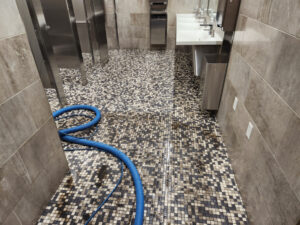
When those liquids hit your grout lines, they don’t just sit on top waiting for a light breeze to dry them out. The sugars and oils sink deep into the pores, creating a tacky, invisible glue. That glue then grabs onto every speck of dust, stray hair, and shoe dirt that walks across it.
Before long, the grout that started out crisp gray turns midnight black. Worse yet, that microscopic layer of grease turns your kitchen floor into an accidental ice-skating rink during dinner rush which is great for dramatic effect, but terrible for worker’s comp claims.
Knowing the do’s and don’ts of tile can keep daily messes from spiraling, but mop buckets simply can’t pull grease back out once it’s soaked in.
Commercial Bathrooms: “It Looks Clean… So Why Does It Smell?”
You can wipe down the mirrors until they sparkle. You can scrub the porcelain. You can drop blue pucks in the tanks and hang air fresheners that smell like “Arctic Breeze.”
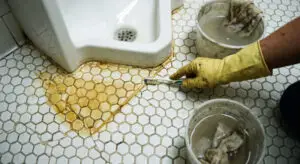
So why does the bathroom still smell like a public rest stop off the interstate?
Because the odor isn’t in the air. It’s under your feet.
Commercial bathrooms see heavy foot traffic and, frankly, questionable aim. When liquids land around urinals and toilets, grout absorbs them straight down to the subfloor level. Bacteria settle into those tiny concrete pores, set up camp, and start feeding.
As that organic matter breaks down, it off-gasses. That’s the “mystery smell.”
You can mop with pure bleach until your eyes water, but as soon as the tile dries, the smell returns. Why? Because a mop only sanitizes the surface. The bacteria partying deep inside the grout lines remain untouched.
It’s the classic commercial dilemma: the floor looks clean, but smells gross. If you’ve ever wondered why your grout smells weird, now you know it’s storing memories you’d rather forget.
The Business Impact: Reviews, Health Inspectors, and Morale
Your customers might not consciously register a spotless floor, but they will instantly notice a gross one.
People judge your kitchen’s hygiene by the state of your bathroom floor. One single Yelp review mentioning sticky tiles or foul odors can cost you dozens of covers a month.
Beyond customer perception, filthy grout is a health code headache and an employee morale killer. Nobody wants to work an eight-hour shift in a breakroom that smells like sour milk, or dodge slick spots in a line kitchen.
Sometimes, your floors just need some love from heavy-duty equipment to restore the professional environment you built.
How TBird Carpet Care Fixes It (Without Ruining Your Schedule)
Scrubbing grout with a toothbrush on your hands and knees isn’t in your job description and hiring your teenager to do it over the weekend won’t cut it either.
At TBird Carpet Care, we don’t use mop buckets. We bring 70+ years of combined experience and high-tech, truck-mounted extraction equipment that acts like a pressure washer and a super-vacuum combined into one glorious machine.
Here’s how we handle St. George tile and grout cleaning:
- High-Temp Steam Extraction: We blast super-heated water directly into the grout pores to liquefy trapped grease, sugars, and odor-causing bacteria.
- Instant Vacuum Recovery: As fast as the water hits the floor, our truck-mounted system sucks it and all the dissolved gunk completely out of your building and into our holding tank. No dirty water stays behind.
- Clear or Color Sealing: Once clean, we seal the grout lines so future spills stay on top of the surface where your daily mop can actually reach them.

Best of all? We work around your business hours. We come in after you close or before you open. You leave messy, sticky floors at night, and walk into bright, odor-free tile in the morning with zero downtime for your customers or crew.
Ready to Ditch the Sticky Floors?
Stop fighting a losing battle with mop water. Let’s get your commercial space looking clean, smelling fresh, and passing inspection with flying colors.
Contact TBird Carpet Care today for a quick, no-pressure commercial quote in St. George, Cedar City, or surrounding Southern Utah areas.