If you live here, you know the struggle: Southern Utah is gorgeous, but it’s also incredibly dusty. We love the red rocks of St. George and the crisp mountain air of Cedar City, but we aren’t exactly thrilled when those landmarks decide to relocate into your living room carpet.
It starts with a simple “I forgot my keys” dash across the carpet. Then it’s “I’m just bringing in the groceries.” Before you know it, your home has a “shoes-on” policy that’s quietly wreaking havoc on your investment.
At TBird Carpet Care, we’ve spent 70 years looking at the bottom of Southern Utah’s feet. We’ve seen the debate from both sides, and honestly? It’s time for an intervention. Your floors are tired, and they’d really appreciate it if you left the hiking boots at the door.
The Sandpaper Effect: Why Your Carpet is Crying
Most people think the main reason to take off your shoes is to avoid “visible dirt.” We wish it were that simple.
The real enemy is the microscopic grit you can’t see. When you walk on your carpet with outdoor shoes, you’re ground-shipping thousands of tiny, jagged soil particles deep into the base of the fibers. Every time you step, those particles act like tiny saws: they’re effectively shredding your carpet’s lifespan from the bottom up.
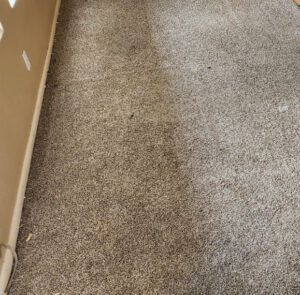
This is what we call “traffic lane gray.” It’s not just dirt; it’s physical damage to the carpet that no vacuum in the world can fix. And since your carpet is basically a giant air filter, filling it with driveway grime effectively “clogs” your home’s ability to keep the air clean.
Tile and Grout: The “Dirt Magnet” Problem
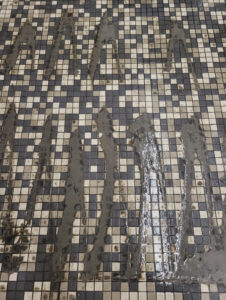
Don’t think you’re off the hook just because you have hard floors. Tile is durable, sure, but grout is incredibly porous. Think of your grout lines as a series of tiny, thirsty sponges.
When you walk inside with shoes that have touched a rainy Cedar City sidewalk or a dusty St. George trailhead, that moisture and soil slurry gets pressed directly into the grout. Over time, that pristine light gray grout turns a murky charcoal. It’s why we’re the go-to for St. George tile and grout cleaning: because at this point, your mop is just moving the mud around.
A Tale of Two Buckets: The TBird “Sludge” Test
We see the proof of the “shoes-off” lifestyle every single day in our waste tanks. We recently cleaned two similar homes in the same neighborhood, and the visual evidence was enough to make a scientist weep.
- House A was a “shoes-off” household. The extraction water looked like a cup of weak herbal tea. It was mostly just standard indoor air particles: skin cells (stay with me here), lint, and light dust. It was the kind of water that says, “I live here, but I respect the boundaries of the front door.” It was mildly disappointing for a cleaning tech looking for a ‘wow’ moment, but a massive win for the homeowner’s floor lifespan.
- House B was a “shoes-on” household with a couple of busy kids and a dog. The water coming out of House B? It looked like it was harvested from a swamp behind a mechanic’s shop. It was thick, jet-black, and had a visible oily sheen from all the asphalt and road tar tracked in from the driveway. When we finished, there was a layer of actual red dirt sediment at the bottom of our recovery tank. That’s not just “dirty”—that’s a geological survey of the St. George trail system living in your living room. It smelled like wet pavement and stagnant mud, the visual equivalent of a horror movie for your flooring.
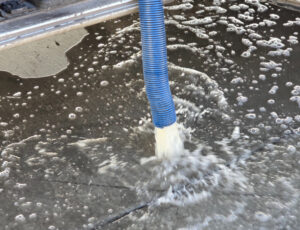
The difference isn’t just aesthetic. The “Shoes-On” house required twice the agitation, three times the “flushing,” and significantly more specialized treatment to break down the oils and greases that shoes track in from gas station floors and oil-slicked driveways.
The “Gross Factor” (Because We Have to Mention It)
If the mechanical damage doesn’t convince you, maybe the biology will. Studies show that the outside of our shoes are essentially a mobile colony for bacteria (including the stuff you find in public restrooms—yikes).
If you have toddlers crawling on the floor or you’re the type of person who likes to binge-watch TV while sitting on the rug, you’re sharing that space with whatever was on the floor of the gas station three days ago.
The Great Reset: How to Fix It
If you’ve been a “shoes-on” family, don’t panic. You don’t need to rip out your flooring and start over; you just need a tactical reset. Here is how we recommend reclaiming your home:
- The Professional Deep Clean: Your household vacuum is great for crumbs, but it’s basically just tickling the surface when it comes to deep-seated grit. Start with a professional hot water extraction. We use industrial-grade equipment that reaches the “dirt layers” your vacuum can’t touch, effectively flushing out the sandpaper before it does more damage.
- The “Landing Strip” Strategy: Create a designated zone for the chaos. Place a sturdy bench and an attractive basket right by the most-used entrance. If there’s a comfortable place to sit and a specific home for the shoes, guests and kids are 90% more likely to follow the “shoes-off” rule without you having to be the “Carpet Police.”
- The Slipper Swap: If the idea of walking barefoot makes you cringe (or you just don’t want to step on a rogue Lego), invest in a pair of “indoor-only” slippers or house shoes. You get the arch support and warmth you need, while your carpet stays free from the motor oil and red dirt of the outside world.
- Upgrade Your Doormats: Use a high-quality “scraper” mat outside and a moisture-wicking mat inside. This “one-two punch” catches a huge percentage of the soil load before it even makes it past the threshold.
Ready to see how much “outdoor” is currently living in your “indoor”? Let us help you hit the reset button. Whether it’s getting that Cedar City carpet back to its original bouncy self or making your St. George tile sparkle again, we’ve got the 70 years of experience to get it done right.
Contact TBird Carpet Care today and let’s get that “House B” water out of your life for good.